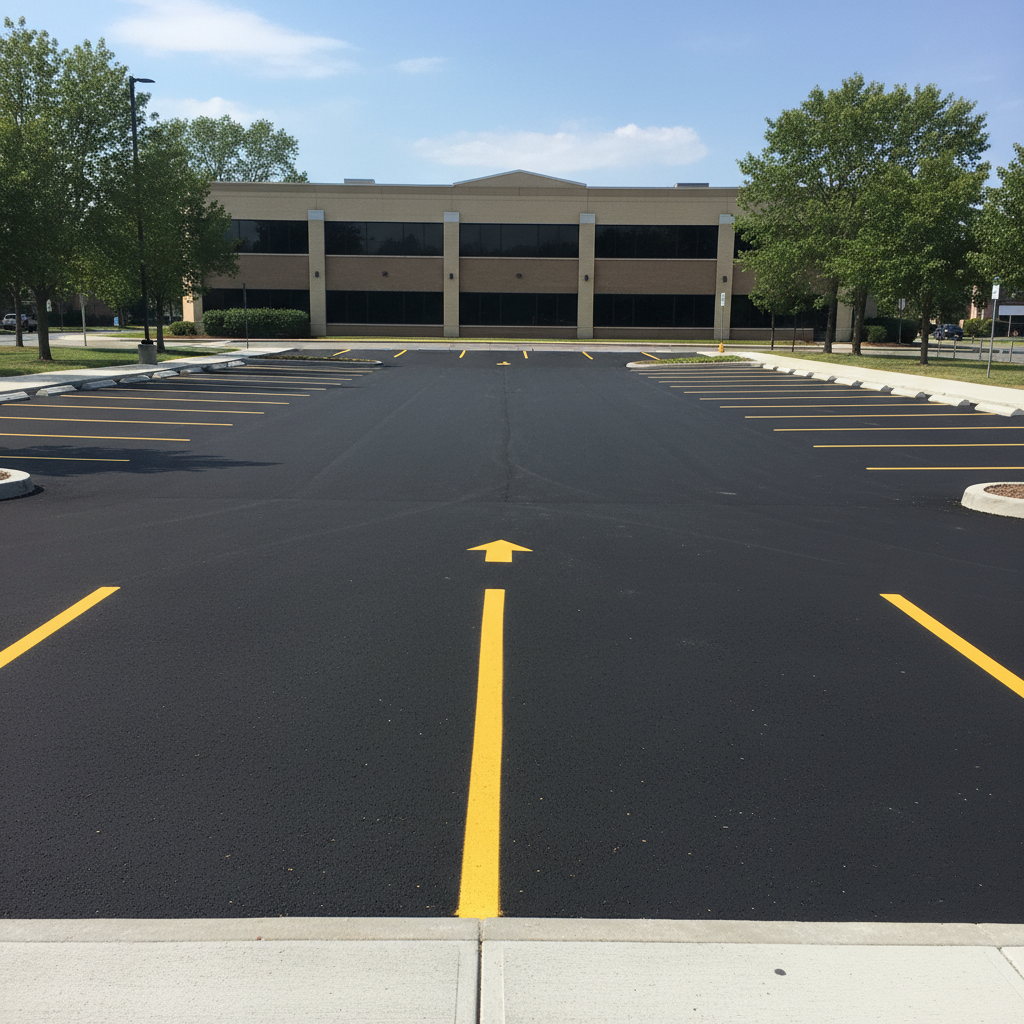
Most driveway and parking lot jobs in this city don't fail because the asphalt was bad. They fail because of what's underneath it, or what never got done before the paver showed up with hot mix. Picking a contractor here is less about finding someone who can spread blacktop and more about finding someone who won't skip the parts you can't see once it's done.
What's actually under the asphalt matters more than the asphalt
A lot of New York City and the inner suburbs sit on fill. Parts of Brooklyn and Queens were marsh or landfill before they were streets. Other spots, especially further out in Westchester and parts of Long Island, have heavier clay that holds water and heaves a little with frost. Either way, the base course under your driveway has to deal with ground that moves. A contractor who grades the subgrade, compacts it in lifts, and lays a proper stone base (usually 4 to 6 inches of crushed stone for a residential driveway, more for anything that'll see truck traffic) is doing the part that actually determines whether the surface lasts 15 years or cracks apart in four.
If a company's quote jumps straight from "we'll excavate" to "we'll pave," ask what's going in between. There should be an answer, and it shouldn't be vague.
Reading a quote like someone who's seen this go wrong
Ask for the asphalt thickness in writing. A residential driveway in this area typically runs 2 inches of binder course plus 1.5 inches of top course, compacted. A commercial lot that's going to take delivery trucks or heavy traffic should run thicker, often 3 inches of binder and 2 inches of surface, sometimes more depending on use. If a quote just says "asphalt" with no number, that's a gap, not an oversight.
Also ask whether they tack coat between layers. Skipping the tack coat is one of those shortcuts that doesn't show up for a year or two, then shows up as the top layer sliding or separating. Cheap quotes skip it because it costs time, not because it doesn't matter.
- Get the base depth and material in writing, not just "we'll prep it properly."
- Get the asphalt thickness for each layer, not a single combined number.
- Ask how they handle drainage and slope, especially if your lot already pools water.
- Ask what temperature range they won't pave in. A contractor who says "we pave in January if you want it" is telling you something.
Weather windows and why timing isn't flexible
Asphalt has to be laid above roughly 50°F and compacted while it's still hot, which in New York means the realistic paving season runs from April through early November, with July and August being the trickiest because the mix can cool and set faster than crews expect in extreme heat, and because afternoon downpours can shut a pour down mid-job. Winter paving exists but it's a patch job, not a finished surface, and any contractor doing it should tell you that plainly instead of letting you assume it's permanent work.
New asphalt also needs time before you ask anything of it. Plan on staying off a new driveway for 24 to 48 hours before foot or light car traffic, longer before you park a heavy vehicle on one spot repeatedly. If you're planning to sealcoat, new asphalt needs roughly 30 to 90 days to cure first. A contractor pushing you to sealcoat immediately after paving either doesn't know better or is trying to upsell a second visit before the oils in the fresh mix have had a chance to come up and bond properly.
Permits, curb cuts, and the parts that aren't optional
If the job touches the curb or the apron where your driveway meets the street, that's public right-of-way in New York City, and DOT has a say in it. A curb cut generally needs a permit, and the finished apron has to meet the city's slope and width standards, which exist partly so your driveway doesn't dump water into a neighbor's yard or create a trip hazard on the sidewalk. A contractor who's done this before will mention the permit without being asked. One who shrugs and says "we'll just pour it" is either planning to skip the step or hoping you won't notice until it's your problem with the Department of Buildings later.
HOAs aren't common inside the five boroughs, but they're routine in parts of the surrounding suburbs, and co-op and condo boards function the same way for private lots and shared driveways. If you're in one of those situations, get the board's sign-off before the crew shows up, not after.
What to walk away from
A bid that's dramatically lower than the others usually means thinner asphalt, no stone base, or both. Asphalt is priced by the ton and by labor hours, and there's a floor under what it actually costs to do a 2-car driveway right. Below that floor, something's getting cut.
Walk away from anyone who wants full payment up front, who can't show proof of insurance, or who won't give you a thickness and base spec in writing. Walk away from anyone who tells you cracks will never come back. They will, eventually, because asphalt is a flexible pavement that moves with freeze-thaw cycles every winter here. The honest answer is that a well-built driveway needs crack sealing and the occasional patch over the years, not that it's immune to it.
A contractor who's licensed, insured, and willing to walk you through the base, the thickness, and the timeline isn't hiding anything. That's really the whole test. We lay out that same information for every job we quote at Oasis Asphalt Co, because a homeowner who understands what's going into the ground makes a better decision than one who's just comparing two numbers on a page.